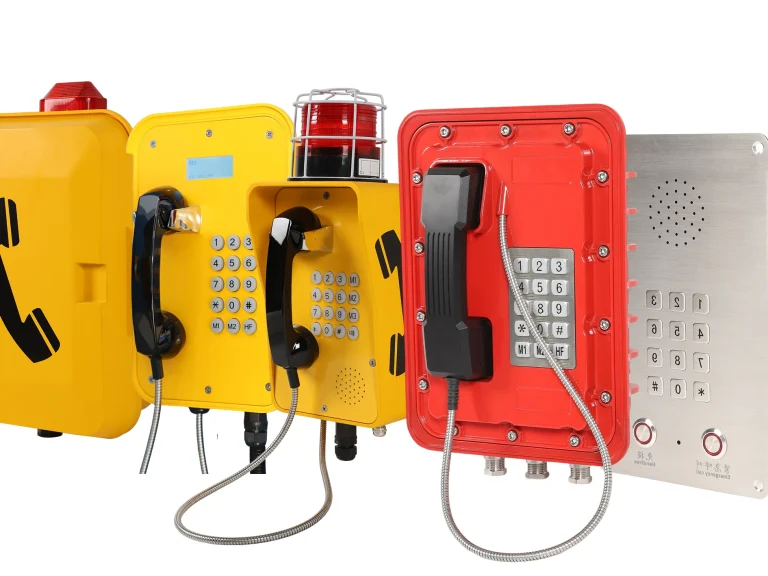
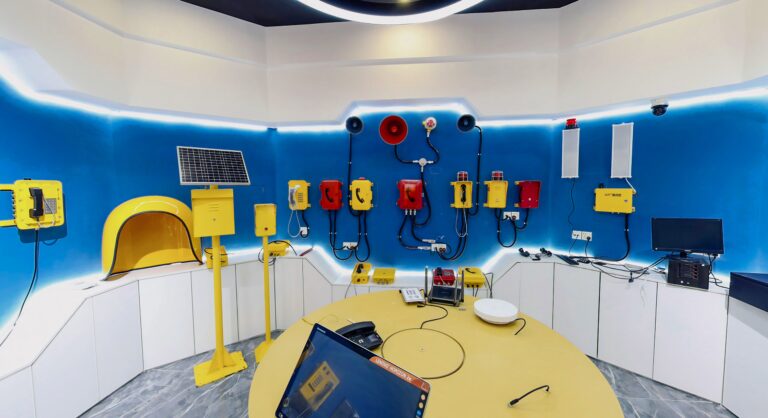
Brief Introduction
In petrochemical, mining, power, metallurgical, port, and dusty work environments, combustible gases, vapors, or dust coexist with electrical equipment. Once an electric spark or high temperature occurs, it can trigger serious accidents. Therefore, explosion-proof design of industrial equipment is not an optional add-on but a core component of the safety production system.
To unify safety requirements globally, countries and international organizations have established multiple mature sets of explosion-proof standards. These standards directly determine the design, selection, and application boundaries of industrial explosion-proof telephones.

Overview of International Mainstream Explosion-Proof Standards Systems
1.IECEx System: The Global Benchmark
The IECEx System, governed by the International Electrotechnical Commission, serves as the premier international framework for the certification of equipment used in explosive atmospheres. While widely adopted across the Asia-Pacific, the Middle East, and South America, its influence is felt globally.
- Standardization Basis: Built upon the IEC 60079 series, ensuring technical uniformity across borders.
- End-to-End Oversight: Unlike systems that focus solely on the final product, IECEx mandates a holistic audit, encompassing initial design, manufacturing processes, and ongoing quality management systems.
- Reciprocal Acceptance: Its primary advantage is the “one-stop-shop” approach, where certification in one member country facilitates market entry in others, drastically reducing the time and cost of redundant testing.
- Strategic Value: For multinational engineering firms, IECEx is often the preferred credential due to its rigorous technical consistency.
2. ATEX System (EU Explosion-Proof Directive)
ATEX is a mandatory regulation established by the European Union for explosive environments, mainly applicable to the European Economic Area market. Key features of ATEX standards include:
- Clearly classifies equipment according to usage environment and hazard levels.
- It is necessary to examine the risk assessment during the product design phase.
- Emphasizes the safety of equipment throughout its “entire lifecycle”.
- All industrial explosion-proof equipment entering the EU market, including explosion-proof telephones, generally needs to comply with ATEX directives.
3. North American Standards: The NEC, UL, and FM Landscape
North America utilizes a distinct philosophy for hazardous area safety, traditionally centered on the Division and Class system, though it has increasingly integrated Zone-based concepts in recent years.
- Regulatory Pillars: Compliance is primarily driven by the National Electrical Code (NEC), with testing and certification handled by independent bodies like Underwriters Laboratories (UL) and FM Global (Factory Mutual).
- Installation Integrity: There is a heightened focus on the interaction between the equipment and its specific installation environment, emphasizing total system protection.
- Industry Dominance: These standards are the “gold standard” for the oil, gas, and petrochemical sectors across the United States and Canada.
Common Core Technical Elements in Explosion-Proof Standards
Regardless of the certification system used, explosion-proof standards generally revolve around the following key technical aspects:
1. Explosion-proof types:
Such as flameproof (Ex d), intrinsic safety (Ex i), increased safety (Ex e), etc., used to control the generation or propagation of ignition sources.
2. Equipment applicable areas:
Divided into Zone 0 / 1 / 2 (or corresponding dust zones) according to the frequency of explosive substances.
3. Gas and dust grouping:
The explosion energy generated by different media in the oil and gas industry environment varies significantly, requiring equipment to be matched with the corresponding protection level.
4. Temperature groups:
Limit the maximum surface temperature of equipment to prevent ignition of the surrounding environment.
Common Explosion-Proof Standards and Types for Industrial Explosion-Proof Telephones
1. Common Explosion-Proof Certification Combinations
• Ex d (Flameproof type):
Limits any internal explosion within a high-strength enclosure, suitable for harsh field environments.
• Ex ib / Ex ia (Intrinsic safety type):
Limits circuit energy to ensure that explosive substances cannot be ignited under any fault condition, commonly used in high-risk areas.
• ATEX / IECEx / GB certifications in parallel:
Meets access requirements for different countries and projects.
2. Typical Application Areas for Industrial Explosion-Proof Telephones
• Oil refining units, tank areas, pump stations
• Chemical plant reaction workshops, pipe galleries
• Coal mines and coal preparation plants
• Port bulk cargo handling areas, dust-prone work areas
• Metallurgy, power plants, and hazardous material storage areas
Different application scenarios have varying requirements for explosion-proof rating, protection level (IP rating), corrosion resistance, and reliability.
Professional explosion-proof communication is an important part of industrial safety. Safecom has been focusing on industrial communication for over 15 years. Our explosion-proof telephones meet international standards and can be customized flexibly according to customer needs. If you have related requirements, you can contact us via the email below.